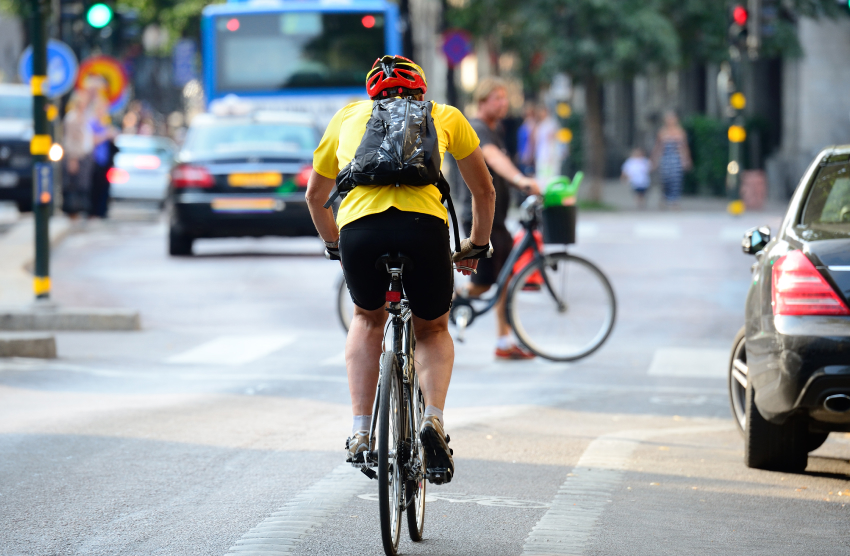
Pedestrians and cyclists struck by vehicles on roads across the Florence, Union, Burlington and Hebron area face about 10 times the risk of serious injury or death compared to people inside cars, according to a regional crash analysis released July 14.
The Ohio-Kentucky-Indiana Regional Council of Governments published its Vulnerable Road User Crash Analysis 2015–2024, a decade-long review of bicycle and pedestrian crashes across its eight-county region, which includes Boone, Kenton and Campbell counties. The findings quantify a risk that exists on the same arterial corridors Boone County residents use daily.
About 2% of all motor-vehicle crashes in the region resulted in a fatal or serious injury. For crashes involving a pedestrian or cyclist, that figure jumped to nearly 20%, according to the OKI report.
Who bears the greatest burden
Communities where more households lack access to a car are hit hardest. Census tracts with high shares of car-free households represent 18% of the region's population but account for 42% of fatal and serious pedestrian and cyclist crashes, according to the report. Areas with higher concentrations of older adults, people with disabilities and low-income residents also showed elevated crash rates.
Over the full 10-year period, the OKI region recorded 6,117 pedestrian-involved crashes resulting in 259 deaths, and 1,727 bicycle-involved crashes resulting in 29 deaths. Serious bicycle crashes have increased since 2020, and serious pedestrian crashes remain above pre-pandemic levels.
Speed and arterials drive the worst outcomes
Elizabeth Niese, Ph.D., OKI senior data analyst and the study's author, said vehicle speed is the single strongest factor determining whether a pedestrian survives a crash.
"Even small increases in speed sharply raise the risk for pedestrians and cyclists, which is why high-speed corridors remain such a critical safety concern," Niese said in the July 14 release.
A pedestrian hit at 25 mph has about a one-in-five chance of a fatal or serious injury. At 35 mph, that risk jumps to 50%.
Arterial roadways account for only about 10% of road miles in the OKI region but are the site of roughly 50% of all fatal and serious pedestrian and cyclist crashes, the study found. Local residential streets, which make up more than 70% of road miles, see far fewer severe incidents.
Lighting plays a role
The study also examined streetlights. On roads with fewer than 16 streetlights per mile, 27% of nighttime pedestrian and cyclist crashes resulted in a fatal or serious injury. Where at least 53 streetlights per mile were present, that rate dropped to 15%.
Most crashes occurred between 3 p.m. and 8 p.m., when traffic volumes peak and visibility fades at dusk.
What OKI recommends
The study calls for slowing traffic on high-speed corridors, improving streetlight coverage and investing in safer arterial road designs, particularly in communities that depend on walking and transit. Residents can access the full report at oki.org.