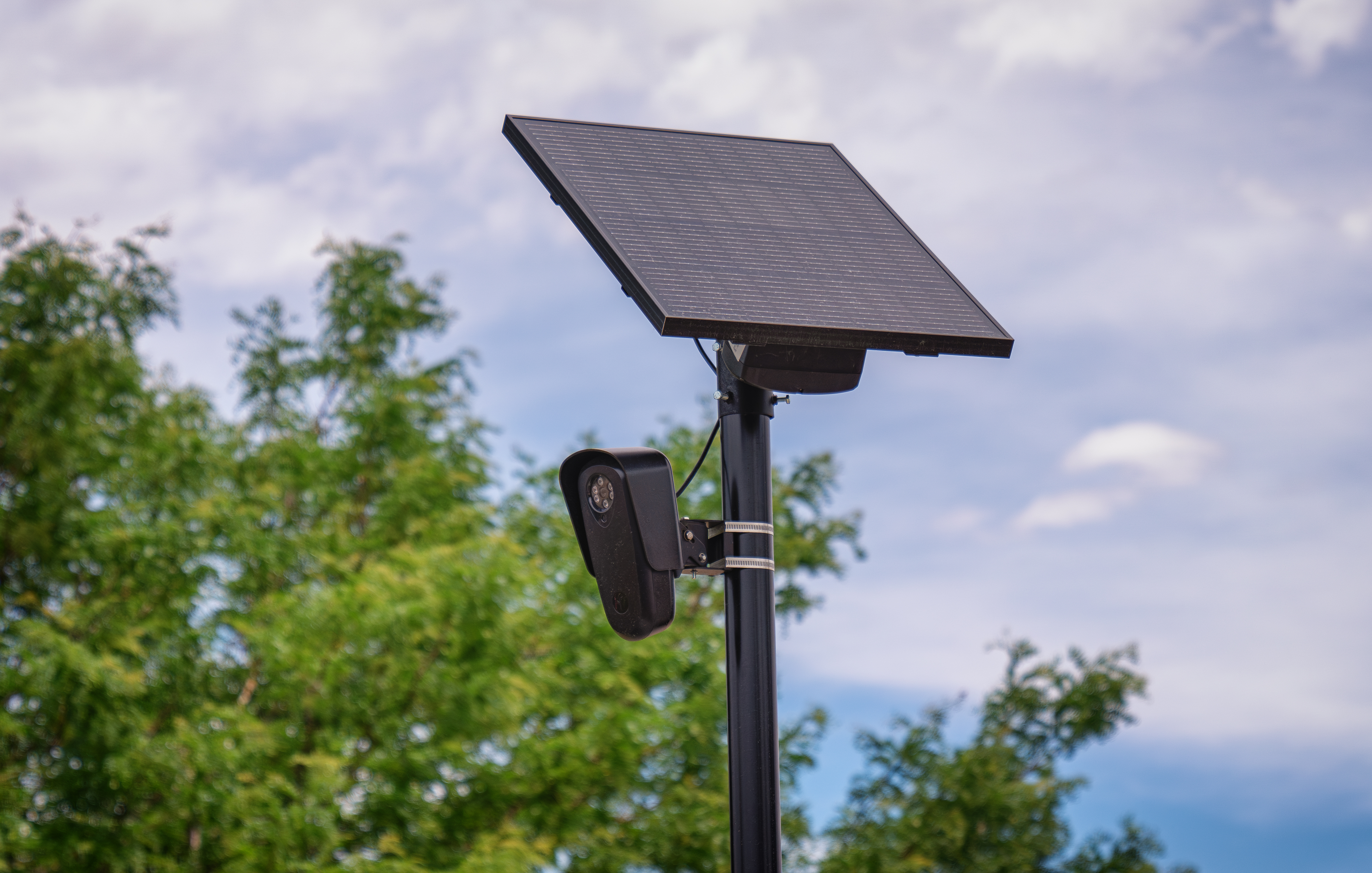
Burlington state Rep. T.J. Roberts plans to file legislation in the 2027 Kentucky General Assembly session that would force police departments using Flock Safety license plate cameras to comply with new Fourth Amendment privacy standards set by the U.S. Supreme Court in June.
Thirty of those cameras already scan Boone County roads.
Roberts, a Republican, told Spectrum News 1 he wants to get ahead of federal lawsuits that could hit Kentucky agencies still operating the surveillance technology without updated safeguards.
"We have to look at this and realize that the Chatrie decision, its opening up so many other areas to federal litigation, and it's for the better that we take a proactive step to secure the basic Fourth Amendment rights of our Kentuckians before this lands us in a federal court room, where we're going to be forced to change the law anyway and we're also going to be stuck with the attorney fees," Roberts said.
The bill would respond to the Supreme Court's 6-3 ruling in Chatrie v. United States, decided June 29. The court held that law enforcement conducts a Fourth Amendment search when it obtains location-history data, even when a third-party technology company holds that data and even if the time period is as short as two hours.
Roberts' bill is not a ban. His earlier 2026 bill to outlaw automatic license plate readers entirely failed. Instead, a separate measure, House Bill 58 filed by Rep. John Hodgson, R-Fisherville, passed and took effect July 15. That law caps ALPR data retention at 90 days and requires agencies to adopt written policies on access, oversight and audits.
Roberts said his 2027 bill would go further, ensuring the technology itself is not used in ways that could be considered unconstitutional under the new Chatrie standard.
Newport walks away
Roberts' announcement follows Newport Police's formal decision not to sign a permanent Flock contract after completing a 16-camera pilot. Newport ended the program around July 14, days after a July 8 town hall where scores of residents spoke against the cameras.
Newport cited public feedback and the Chatrie ruling in its official statement, saying the decision should not be interpreted as opposition to public safety technology but that the department remains committed to respecting constitutional rights.
Roberts told Spectrum News 1 he supports Newport's decision, saying elected officials should listen when a community rejects the technology.
What's in Boone County
As we reported Aug. 4, 30 Flock cameras operate in Boone County: 20 under the Boone County Sheriff's Office at a cost of $198,000, and 10 under Florence Police at $69,100. Across Boone, Kenton and Campbell counties, 101 devices are approved for use, with more on the way.
The cameras log a vehicle's plate number, time stamp, make, model and color. That data is searchable by law enforcement agencies nationwide that share their Flock networks.
Neither the Boone County Sheriff's Office nor Florence Police have commented publicly on whether the Chatrie ruling or Roberts' planned bill affects their programs.
What's next
Roberts plans to file his bill when the General Assembly convenes in January 2027. No draft text or bill number has been released.